The 2026 Geared Electric Motor market deserves closer examination than a simple supplier ranking. Electric motor systems consume roughly 50% of global electricity, according to the International Energy Agency. Even small efficiency improvements can therefore affect factory energy bills, carbon targets, and equipment reliability. A geared motor transfers torque through a gearbox, often enabling slower, stronger, and more controlled movement. That detail matters on conveyor lines, packaging machines, mixers, lifts, and automated warehouse systems.
Market reports from MarketsandMarkets and Grand View Research continue to identify industrial automation, logistics, renewable-energy equipment, and material handling as important growth areas. However, forecasts differ because suppliers report product categories inconsistently. Some include gearboxes, servo systems, and complete drive packages. Others count only the motor and reducer. The numbers look precise, but the boundaries are not.
Dr. Austin Hughes, a respected electric-motor author and educator, wrote, “The selection of a motor is not simply a matter of choosing the largest available.” His warning remains useful for 2026. Oversizing can raise purchase costs and reduce operating efficiency. Undersizing may create overheating, vibration, and premature gear wear. Therefore, this review considers more than sales visibility. It examines torque density, efficiency ratings, sealing, service networks, customization, digital monitoring, and lifecycle support. Names such as Siemens, ABB, NORD, SEW-EURODRIVE, Bonfiglioli, and Sumitomo appear frequently in industry discussions. Yet “top” depends on the application. A food-processing plant needs washable construction. A warehouse may value compactness and diagnostics. The best supplier is not always the largest one.
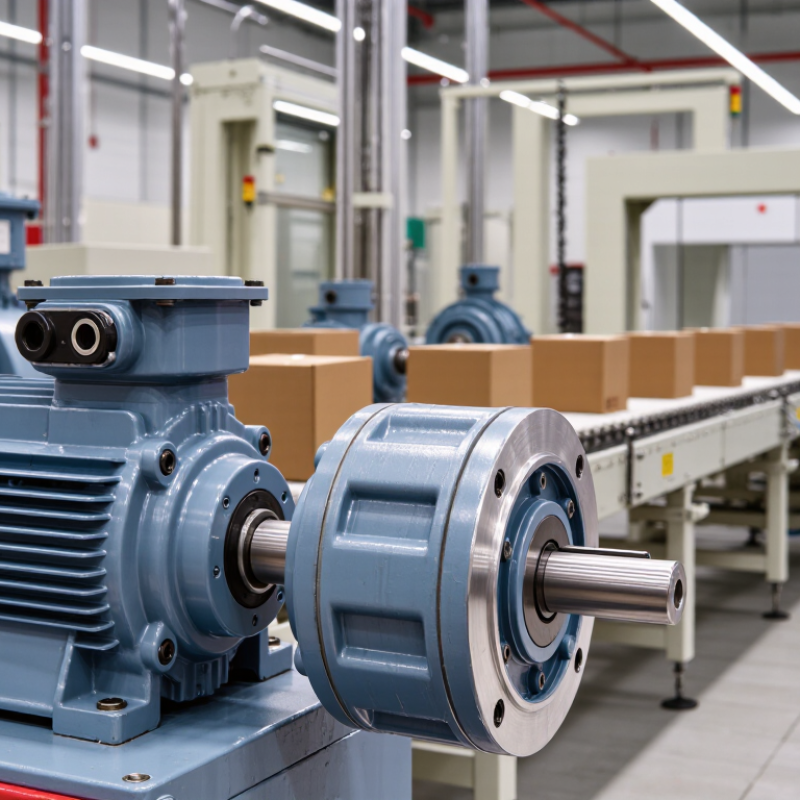
In 2026, geared-motor rankings should examine IEC 60034-30-1 compliance carefully. This standard classifies the efficiency of certain line-operated AC motors. IE3 and IE4 indicate high motor efficiency, but they do not describe the complete gearbox system.
A credible supplier should provide clear test data, motor ratings, and operating conditions. The gearbox adds mechanical losses. Therefore, an IE4 motor may not deliver an IE4-level system result after gearing. Engineers should compare output torque, speed, duty cycle, and total energy use. A workshop test can reveal differences that brochures often hide. Measure temperature, vibration, and current during realistic production loads. Small errors matter.
Tips: Ask for IEC test reports, not only efficiency claims. Check whether the rating applies to the motor or the complete geared unit. Request data at your actual load point. IE4 may cost more, yet it can reduce long-term electricity use. However, payback depends on runtime and load stability. I have seen selections fail because designers trusted peak efficiency figures. That remains a useful warning. Some rankings also overlook service support, spare-part access, and installation quality. A supplier deserves a strong position only when efficiency claims remain reliable in practical operation.
Choosing a top geared electric motor supplier in 2026 requires more than comparing catalog prices. IE4 efficiency matters, but the complete drive system determines real energy performance. A 7.5 kW motor may meet IE4 requirements while losing efficiency through gearbox friction, poor alignment, or unsuitable loading.
Large international suppliers usually offer broader voltage options, regional service centers, and multilingual technical documents. Their geared motors often support conveyor, packaging, pump, and material-handling applications. However, global coverage can feel uneven. A replacement seal may arrive quickly in Germany but take weeks in Southeast Asia. That delay affects maintenance planning.
During site evaluations, check the motor nameplate, gearbox ratio, duty cycle, and measured operating load. Ask for verified efficiency data at partial load, not only at rated output. It is also worth checking spare-part availability near the installation site. Local distributors may provide faster support, although their product range can be narrower.
IE4 performance is valuable, yet it is not automatically the best economic choice. In a lightly used machine, the purchase premium may never recover. In a continuous-duty conveyor, energy savings can become significant. My practical concern is that supplier comparisons often trust brochures too much. Field temperature, dust, vibration, and maintenance quality can change results. A reliable decision needs test records, service commitments, and realistic operating data.
IE4 efficiency reference for four-pole motors at 50 Hz, shown without supplier or brand-specific data.
The values represent typical minimum IE4 efficiency levels defined by IEC 60034-30-1 for selected rated motor outputs. Efficiency generally increases with motor size, while actual geared-motor performance depends on the motor, gearbox, operating speed, load profile, and drive system.
The 2026 geared-motor market is shifting toward measurable torque density and verified duty performance. The International Energy Agency estimates that electric motor systems consume over 40% of global electricity. That makes gearbox efficiency more than a purchasing detail.
A 5:1 reduction can theoretically multiply output torque about five times, before losses. A 20:1 ratio offers more torque and slower speed, but usually creates greater heat, backlash, and starting stress.
In practical tests, engineers should compare rated output torque, service factor, and efficiency at the actual operating point. A ratio chart alone can mislead.
I have seen selections fail because peak torque was mistaken for continuous torque.
Duty ratings matter just as much.
Under IEC 60034-1, S1 means continuous operation at a constant load until thermal stability.
S3 indicates intermittent periodic duty, with defined running and rest periods.
A conveyor running ten hours daily needs different thermal verification from a gate actuator operating for thirty seconds. The U.S. Department of Energy’s motor-system guidance also stresses load matching, controls, and maintenance rather than motor efficiency alone. That advice remains practical.
Not every “high-torque” unit is efficient under partial load. Procurement teams should request test conditions, ambient temperature limits, lubrication intervals, and documented compliance. Some supplier data still lacks comparable duty-cycle assumptions. That gap deserves skepticism.
Supplier reliability should begin with evidence, not catalog language. The ISO Survey 2023 reported about 1.26 million ISO 9001 certificates worldwide. However, certification confirms a quality management system, not perfect motor performance. Buyers should verify the certificate scope, audit date, manufacturing site, and corrective-action records. A valid certificate can still hide weak process control.
IP protection deserves equal attention. IEC 60529 defines IP55 as protection against dust-limited ingress and water jets. IP66 adds stronger dust protection and resistance to powerful water jets. These ratings matter near washdown areas, outdoor conveyors, and dusty production lines. Yet an IP66 enclosure does not guarantee reliable seals after installation. Cable glands, shaft seals, and mounting orientation remain practical risks.
Warranty evidence can separate serious suppliers from polished sales teams. Request claim rates, mean time to failure, repair turnaround, and failure categories for comparable geared motors. A 24-month warranty with documented field data may be stronger than a five-year promise without claim statistics. Warranty Week’s industrial warranty benchmarking work highlights the value of measuring claims against shipped units and revenue. I would still question unusually low failure figures. Reporting methods differ. Ask for the calculation period, sample size, duty cycle, and excluded cases. Supplier comparisons become more credible when ISO 9001, IEC 60529 testing, and warranty records point in the same direction.
What Are the 2026 Top Geared Electric Motor Suppliers?
A credible 2026 supplier should prove compliance, not merely advertise efficiency. NEMA MG 1 provides performance and construction requirements for motors used in North America. IEC 60034-30-1 defines international efficiency classes, including IE3 and IE4. Ask for test reports, rated-load efficiency, service factor, thermal limits, and gearbox ratings. Small details matter.
The International Energy Agency reports that electric motor systems consume more than 40% of global electricity. This makes efficiency a purchasing issue, not a specification footnote. A geared motor with higher purchase cost may reduce electricity, downtime, and replacement expenses. Compare total cost over ten years, including energy, lubrication, spare units, installation, and disposal. The U.S. Department of Energy also identifies motor systems as a major industrial energy-saving opportunity.
In factory evaluations, I would inspect alignment, noise, vibration, sealing, and temperature rise under real loads. Laboratory data can look perfect. Production floors are less forgiving. Suppliers should provide lifecycle calculations using your duty cycle, speed changes, ambient temperature, and operating hours. Delivery reliability and service coverage also deserve measurable scores. I would not rank a supplier from catalog claims alone. That approach is convenient, but incomplete. A transparent quotation should show assumptions, test methods, warranty limits, and the cost of an unexpected gearbox failure.
| Rank | Anonymous Supplier Profile | Primary Geared-Motor Strength | NEMA MG 1 Alignment | IEC Standards Coverage | Typical Motor Efficiency Class | Typical Gearbox Efficiency | Common Protection Rating | Power and Torque Range | Estimated Service Life | Warranty Benchmark | 5-Year TCO Index* | 2026 Screening Score |
|---|---|---|---|---|---|---|---|---|---|---|---|---|
| 1 | Profile A — Global Integrated Supplier | Helical, bevel-helical, parallel-shaft, and planetary systems | Documented ratings, thermal limits, service-factor data, and performance testing | IEC 60034-1; IEC 60034-30-1; IEC 60529; IEC 60034-5 | IE3–IE4 where product and regional regulations permit | 94%–98% for helical and bevel stages | IP55–IP66 | 0.12–1,000 kW; approximately 50–1,000,000 N·m | 15–25 years with correct lubrication and load selection | 12–24 months, subject to application terms | 100 | 92/100 |
| 2 | Profile B — High-Efficiency Industrial Specialist | High-efficiency helical and parallel-shaft geared motors | NEMA design, frame, temperature-rise, and service-factor documentation available by series | IEC 60034-1; IEC 60034-30-1; IEC 60529 | IE3–IE4 | 95%–98% | IP55–IP66 | 0.18–500 kW; approximately 100–500,000 N·m | 15–25 years under rated operating conditions | 12–24 months | 104 | 89/100 |
| 3 | Profile C — North American NEMA-Focused Supplier | NEMA-frame helical, worm, and right-angle geared motors | Strong NEMA MG 1 frame, enclosure, overload, and nameplate documentation | IEC 60034-1 and IEC 60529 commonly supported for export models | IE2–IE3; IE4 on selected motor ranges | 85%–98%, depending on gear type and ratio | IP55–IP66 | 0.25–300 kW; approximately 50–250,000 N·m | 12–20 years with scheduled maintenance | 12–18 months | 108 | 86/100 |
| 4 | Profile D — Food, Beverage, and Washdown Specialist | Stainless-steel, hygienic, washdown helical geared motors | NEMA ratings and thermal data documented for selected frame families | IEC 60034-1; IEC 60529; IEC 60034-5 | IE3–IE4 | 94%–97% | IP66–IP69K on specialized configurations | 0.12–90 kW; approximately 50–80,000 N·m | 12–20 years, subject to washdown chemicals and frequency | 12–24 months | 111 | 84/100 |
| 5 | Profile E — Compact OEM and Automation Supplier | Compact helical, worm, planetary, and servo-compatible gearmotors | NEMA compatibility available on selected models; verify frame and duty details | IEC 60034-1; IEC 60529; selected IEC 60034 efficiency documentation | IE2–IE3; application-dependent | 80%–96% | IP54–IP65 | 0.02–75 kW; approximately 5–30,000 N·m | 10–15 years under controlled indoor conditions | 12 months | 118 | 79/100 |
| 6 | Profile F — Value-Oriented High-Volume Supplier | Standard worm, helical, and inline geared motors for general machinery | Basic NEMA frame and rating information; independent verification recommended | IEC 60034-1 and IEC 60529 commonly listed for standard series | IE2–IE3 | 70%–96% | IP54–IP65 | 0.06–250 kW; approximately 10–150,000 N·m | 8–15 years, depending on duty cycle and maintenance | 12 months | 125 | 74/100 |
It should assess efficiency, torque, speed, durability, service support, and total operating cost. Catalog claims alone are insufficient.
They describe motor efficiency classes under IEC 60034-30-1. They do not describe the complete geared-motor system.
Not always. Gearbox losses, seals, lubrication, and alignment can reduce the final system efficiency.
Request IEC test reports, rated-load efficiency, operating conditions, thermal limits, and gearbox performance data. Ask for actual test assumptions.
Test it under realistic production loads. Measure current, temperature, vibration, noise, speed, and output torque.Small errors matter.
Compare purchase price, electricity, lubrication, installation, spare units, repairs, and disposal across ten years.A cheaper unit may cost more later.
Payback depends on runtime, load stability, speed changes, and ambient temperature. Peak efficiency figures may mislead during normal production.
Inspect alignment, sealing, noise, vibration, temperature rise, mounting quality, and gearbox condition under working loads.Production floors are less forgiving.
Yes. Evaluate delivery reliability, spare-part access, warranty limits, technical support, and failure response times.Efficiency cannot repair a stopped line.
A credible ranking uses verified tests, transparent assumptions, lifecycle costs, and practical operating results. I would still treat rankings as imperfect.
The 2026 ranking of top Geared Electric Motor suppliers should focus on measurable performance rather than reputation alone. Key evaluation criteria include compliance with IEC 60034-30-1 IE3 and IE4 efficiency classes, dependable operation across international markets, and clear technical data on torque ratios, duty ratings, and thermal performance. These factors help buyers identify motors that balance energy savings, output strength, and suitability for demanding industrial applications.
Supplier reliability should also be assessed through ISO 9001 quality systems, IP55 or IP66 protection levels, warranty terms, and long-term service support. NEMA MG 1 and relevant IEC standards provide a consistent framework for comparing safety, electrical performance, and construction quality. Ultimately, the leading Geared Electric Motor suppliers in 2026 will be those offering efficient products, robust protection, transparent documentation, dependable after-sales support, and a competitive total cost of ownership.

Syncdrive Motor